THE PROOF · THREE SYSTEMS FROM INSIDE ECELL GLOBAL

Built and run
in a real business.

A storefront, a procurement system and a month-end close. What the work looked like before, what was built, who decides what, and what the records show, including what is still open.

HOW TO READ THESE

Software. Fixed rules and arithmetic. No AI. AI assistance. Reading, explaining, drafting. A person decides. Prices, quantities, the books.

Every figure comes from a dated system record. Where nothing has been measured yet, the case says so.

01 / COMMERCE

TRIAL STOREFRONT

A storefront that
knows its catalogue.

The old store capped every search at 10,000 results. The new front door owns its product data, uses Shopify only for checkout, and lets AI read what a shopper means, never what they pay.

Ink illustration: a crane lowers a new section onto a web page under construction.
7 weeks
From first commit (27 Jul) to live on the shop’s own domain (13 Sep)
384 / 384
Shopping-intent tests passed, plus 173 of 173 discovery checks
3 markets
US, UK and EU, with every price checked against the catalogue before sale

Before

Head Case sells licensed phone-case designs: 1.89 million possible design-and-device combinations. The existing store was, in Cem’s words, “a website with an image library.” Every search hit the platform’s 10,000-result cap, and purchase tracking was broken.

What was built

A composable storefront. The site owns the product data and a versioned manifest that maps every design and device to a sellable variant; Shopify handles only cart, checkout, tax and payment. Shoppers lock their device first, then browse by team, artist or genre. A curated first wave of 1,445 products is on sale in three markets.

Software

  • Owns the catalogue and the price in each market
  • Checks price against catalogue in US, UK and EU
  • Withdraws any listing whose price drifts
  • Tags every order to the new channel

AI assistance

  • Interprets what the shopper is looking for
  • Explains why a design matches
  • Never chooses the product, price, device or stock
  • Coding agents co-wrote 251 of 266 commits, under review

A person decides

  • Sets the price book
  • Approves every catalogue push
  • Publishes each release
  • All store administration stays with people

What the records show

Every release gate passed: prices match the catalogue in all three markets, all discovery and intent tests pass, and the listing check withdraws a product automatically when its price drifts. When the AI is slow to answer, the search falls back to the rules engine instead of waiting.

Still open

This is a trial storefront running alongside the existing store. Conversion tracking isn’t installed yet, so there are no sales results to report. A link is available on request.

02 / OPERATIONS

LIVE

Stock moved on evidence,
not email.

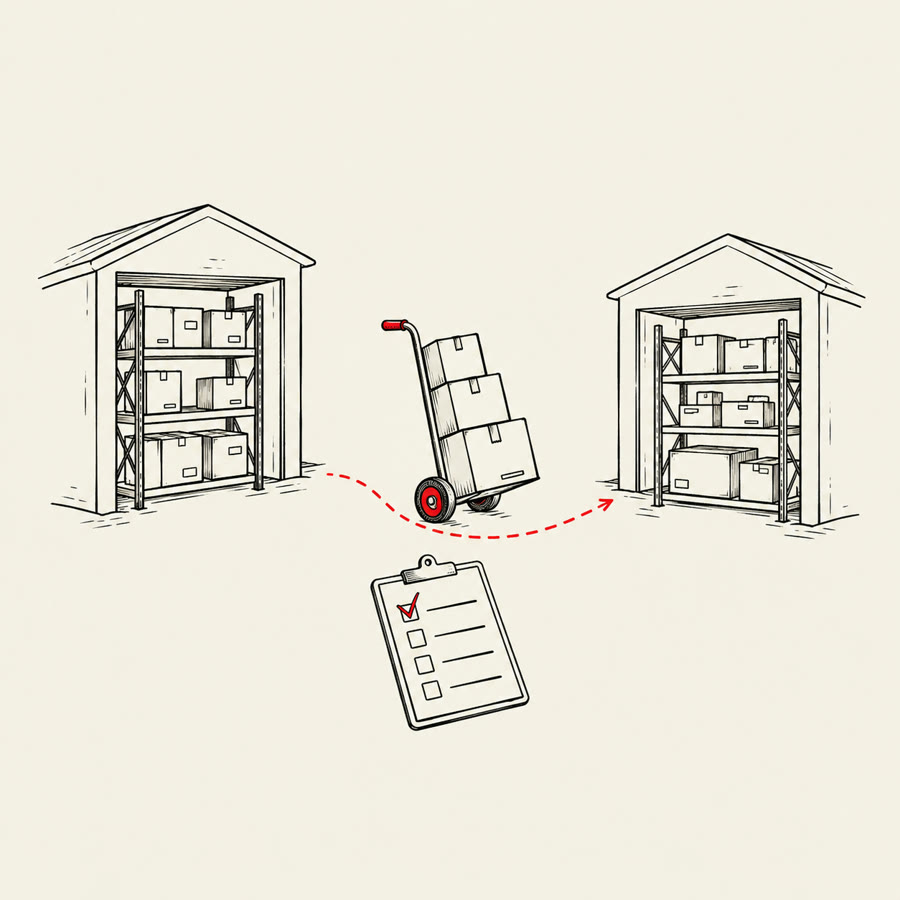
Procurement used to run through the CEO’s inbox and a stack of spreadsheets. Now software drafts stock moves between production sites, AI explains each one, and the warehouse manager approves it in Slack.

Ink illustration: boxes moved by hand truck between two small warehouses along a red dotted path.
0
Quantities or prices the AI is allowed to change
15
Scheduled jobs keeping stock, reorder and transfer data current
3 tiers
Of purchase-order approval by amount: manager, finance, CEO

Before

The project brief said it plainly: “Manual process = Cem as bottleneck. China procurement currently runs through Cem via email.” Transfers between the Philippines, Florida and UK sites were triggered in the legacy order system, with packing lists emailed by hand. Purchase orders went out by email from a template.

What was built

A procurement system on the company’s own data: a mirror of the legacy order system synced every four hours, stock by zone, a reorder queue, purchase-order batches, transfers between sites and a supplier portal. Built from March 2026, with interactive approval in Slack since July.

Software

  • Syncs stock and sales every four hours
  • Calculates best-sellers and reorder points
  • Drafts transfers twice a week, with no AI in the maths
  • Routes each purchase order by amount

AI assistance

  • Writes the rationale for each transfer
  • Flags risks and gives a confidence score
  • Adds reasoning to weekly purchase-order drafts
  • Cannot change a quantity or a price

A person decides

  • Warehouse manager approves or rejects each transfer
  • Managers approve the reorder queue
  • Larger orders go to finance, then the CEO
  • Automatic approval is switched off

What was learned

An expired AI key once stopped every transfer for days, and the alert meant to catch the silence didn’t fire. The lesson: advisory AI must never sit in the critical path, and a system going quiet needs its own alarm.

Still open

No reduction in stock-outs has been measured yet. Supplier orders are still placed in the legacy system, and receiving is closed by hand.

03 / FINANCE

IN USE · MONTH-END

Closing the books
from the source.

When the accounting-connector subscription ran out mid-quarter, Cem replaced it with a month-end close that reconciles from the marketplace statements themselves. Agents prepare it; he approves it.

Ink illustration: an open ledger, fountain pen, clipped receipts and a red tick.
$0.00
Left unexplained across Amazon US income, Jan–Jul 2026: all seven months, all five income accounts
76 / 76
Journals posted and independently verified
~6 weeks
From the decision (7 Aug) to the first posted close

Before

A connector mapped marketplace settlements into drafts for a person to approve and reconcile. Carrier invoices arrived as wide spreadsheets and were categorised by hand. Cost of goods and freight lived in spreadsheets with a flat exchange rate.

What was built

A close that rebuilds every marketplace statement, enforces a clearing identity (cash in = revenue + fees + VAT + reserve movement) and matches bank cash with five independent tests. Carrier invoices are checked against contract rate cards. Each month’s journals go into a locked package; a gateway posts one journal at a time, reads it back and checks the profit bridge.

Software

  • Parses and rebuilds each statement
  • Clearing identity and five-test bank match
  • Exchange-rate rules and rate-card audit
  • Posts one journal, reads it back, checks the bridge

AI assistance

  • Reads the odd invoice the parser can’t
  • Curates supplier fact sheets, never a number
  • Prepares and verifies the month’s package

A person decides

  • Rules on accounting treatments
  • Approves each batch
  • Is the only one who can arm a posting
  • Bookkeeper codes receipts and pays bills

What the records show

93 of 93 statements split to the penny. eBay fees match the eBay invoices every month. On a carrier test sample, seven of seven waybills reproduce the invoiced charge from the contract discount, to the cent. The quarter’s UK VAT return was filed through this process.

Still open

No time or cost saving has been measured yet. Two smaller sales channels are still being reconciled, and a few small residuals are left visibly open. The rule is: never force a tie.

WHAT THE THREE HAVE IN COMMON

The model is rarely
the hard part.

What makes these hold up is the engineering around the AI. It is the same discipline Delegait brings to your operation.

  1. 01

    Rules first.

    Anything that can be a rule is a rule: tested, repeatable and free of AI. Prices, quantities and the books are calculated, not generated.

  2. 02

    AI advises. People decide.

    AI reads, explains and drafts. A named person approves anything that moves money, stock or a customer commitment.

  3. 03

    Nothing ships unchecked.

    Prices are checked against the catalogue before sale. Journals are read back after posting. Storefront releases ship only after their tests pass.

BRING A BUSINESS PROBLEM.

Let’s work
it through.

Send Cem a brief

A short form: where the work builds up, and what better would look like. Cem replies by email.